Genesis
The Old Testament
The Old Testament (abbreviated OT) is the first part of Christian Bibles, based primarily upon the Hebrew Bible (or Tanakh), a collection of ancient religious writings by the Israelites
The New Testament
The New Testament (Greek: Ἡ Καινὴ Διαθήκη, Hē Kainḕ Diathḗkē; Latin: Novum Testamentum) is the second part of the Christian biblical canon, the first part being the Old Testament, based on the Hebrew Bible. The New Testament discusses the teachings and person of Jesus, as well as events in first-century Christianity.
Genesis 1
Q1: Why when God speaks of Himself does He always talk of "Us"?
There are three possibilities. Either there is more than one God, or God is referring to the angels, or it is a conversation between the Trinity. The first is not possible, as it would then contradict passages in the Bible like the one found in Isaiah 45, where God states He is the only God. The second is also not possible as the Bible nowhere states that angels have the same “image” or “likeness” as God (see Genesis 1:26). That description is given to humanity alone. Thus the only possibility is that God is talking about the trinity which consists of the Father, the Son, and the Holy Spirit.
GotQuestionsQ2: How did God create light before the sun? We know all natural light comes from stars.
God can, of course, create light without a secondary source. We are told that in the new heavens and Earth there will be no need for sun or moon (Rev 21:23). In Genesis, God even defines a day and a night in terms of light or its absence.
Another theory exists that God Himself was the light, as God refers to Himself as light in the Bible.
Creation.com Christian CourierGenesis 6
Q3: Who are the "Sons of God"?
There are two main views concerning the identity of those “sons of God.” They were either fallen angels, i.e. demons, or they were men descended from Adam’s grandson, Enosh, who were faithful to the LORD.
Scripture on CreationQ4: What are the Nephilim?
The answer here will depend on your view on Question 3. They were the offspring which resulted from sexual relationships between the sons of God and daughters of men. Whether they were supernatural creatures or mere men that did amazing things is up to the reader. All the respected apologetics ministries across the globe differ on this. Apologetics Central does not hold an official position on these verses.
Q5: How big was the Ark? What did it look like?
Answers in Genesis did an in-depth study of the ark and even built a replica in the USA, called the 'Ark Encounter'. Now the Bible doesn't tell us what the ark looked like, but only provides us with the proportions. Image courtesy of Answers in Genesis.
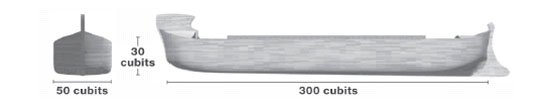 The Ark Encounter
Q6: Is there proof for a global flood?
Every ancient civilization on Earth had a flood legend. A list of some legends sorted by continent can be found here: Wikipedia. Now this in no sense proves a global flood, but at the very least we must ask the question, why would every civilization have an account of a global flood if it is not true? The probability that they all made up the same story is very slim unless they all came from the same 8 people that were left after the flood.
Now to get substantive, is there any hard evidence we can point to that indicate a global flood? Yes. The most compelling for us is the fact that we find fossils of fish high above sea level, for example on Mount Everest (8848m above sea level), as well as the fact that there are so many fossils we can dig up today. For a fossil to form, the object needed to be very rapidly buried and compressed. That is why it is very rare for a fossil to form today if an animal dies in the field. But we do find all these fossils all over the world, thus something must have buried these creatures on a massive scale very quickly like a catastrophic global flood. For more check out answers in genesis.
Answers in GenesisGenesis 7 and 8
Q7: Where did all the water of the flood come from, and where did it go?
If the Earth had a perfectly smooth surface (assuming the Earth was the form of an ellipsoid) then the entire Earth would be covered by about 2.6km of water. Now we do not know what the pre-flood world looked like, but we know that it looked a lot different than our world today. We also read in Genesis that the water did not only come from the heavens, but that the fountains of the Earth opened up, or as the NIV states it: the spring of the great deep.
This by default implies that there must have been forms of seismic activity that were so great, that water literally burst from the crust, the shape of the Earth was heavily manipulated, perhaps to be more sphere-like, and hence the entire Earth was covered in water. But where did the water go then? We find the answer in Psalm 104:8
Here we read that the valleys sank and the mountains rose, once again we read of seismic activity, and the Earth lost its spherical shape. Now on top of this, remember that God created the entire universe, thus a miracle like the flood would in comparison be very trivial for God to do.

Q8: How did the animals populate the Earth after the flood and spread so widely?
The population of animals can increase very quickly as compared to humans as animals only act on instinct and hence will reproduce a lot faster, or rather, exponentially. Thus when we assume an animal lives on average for 20 years and we assume a 50/50 chance that a female will be born, and that a female in the wild can bear up to 15 babies (mostly more) in her lifetime, we find that within 100 years, one species will have more than 30 000 alive (47 460) if we assume none died in the 100 years. If we extend to 200 years, the number alive changes to well over a million. Thus animals can easily repopulate the world within a very short period. But how did they get all the way in Australia? The answer lies in land bridges. Read more:
Christian AnswersGenesis 9
Q9: Why did Noah curse Canaan, son of Ham?
The cursing of Ham has to do with the sin of Ham when his father Noah uncovered himself at his drunkenness. Though we are not told the exact sin of Ham, we do know that it was reprehensible enough for God to curse the line of his son Canaan. The judgment was not directed to Canaan personally but rather to his descendants. There are a lot of theories, read more here:
Blue Letter BibleGenesis 10 and 11
Q10: Is there a contradiction regarding the spread of people when comparing Genesis 10 and 11?
The explanation here is not difficult. The events which are noted for us by Moses in Genesis 10 and 11 were not written in a chronological order. Genesis 10 is a broad sweep of things, with a particular focus on 'the table of nations,' and can really be viewed as an 'insert chapter.' Genesis 11, however, is once again, a historical narrative - just as chapter 9 had been, so the thread continues from there. In Genesis 11 the focus changes completely from chapter 10, we are now back to an events narrative. So there is little question that certain things recorded in chapter 10 occurred after the tower of Babel - not before it. In this chapter, Moses - effectively - temporarily stands back from his earlier narrative, in a reference to how things stood at a much later time. The simple fact is, Bible writers did not always record information in a strict chronological sequence and one can find several examples of this.
UK ApologeticsQ11: Is there evidence for the tower of Babel?
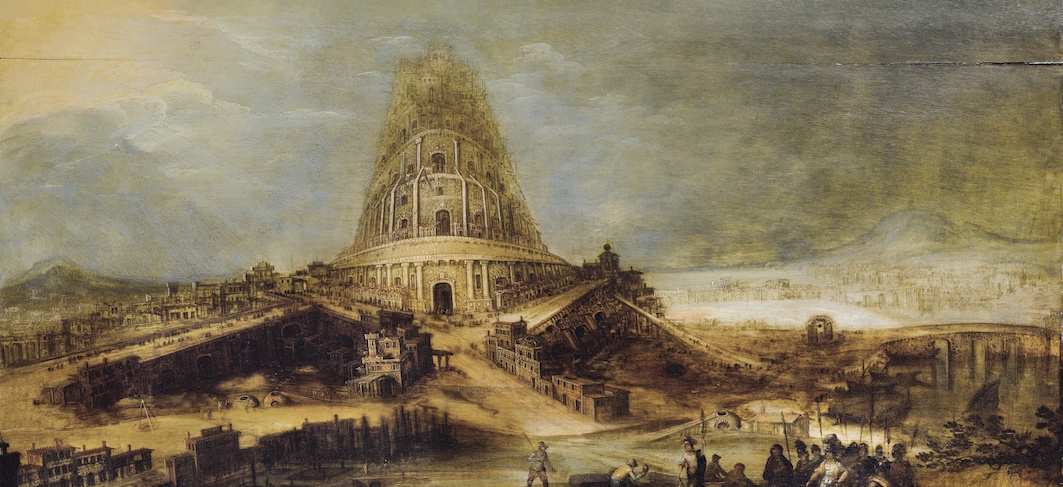
If the Bible is true, what would we expect to find in ancient civilization literature and stories if they all came from the Tower of Babel? All of then would be expected to have a very similar legend that all men once lived in the same place. Just like the flood narrative, we find legends of the Tower of Babel all over the world.
Key parallels are seen between the Biblical and Assyrian accounts of the Tower of Babel incident as well as accounts from ancient Mexico and South America. Although these are not common knowledge, it is a fact that these similar legends emerged across the globe before dominating influence of any kind. Each of them depicts mankind unified by a single language and building a magnificent tower, which angered the gods and led to the confusion of language. Read more at BeliefNet
There are several historical pieces of evidence that lend support to the view of a literal Tower of Babel. Take a look at the following writings from Abydenus and Plato both writing in the 4th century BC. Plato wrote of a golden age when all men spoke the same language but the gods scattered them over the earth. Abydenus also wrote of a great tower at Babylon that was destroyed:
Q12: How did people on the Earth populate to the amount we have today if all people today only come from the eight people who were on the ark? If we all came from the eight people, wouldn't that be incest?
We can use the same mathematics to deduce that when starting with 8 people, we can get over a million people very quickly, especially since people lived over 800 years in those days. Now we must remember that sexual relationships with relatives were not forbidden by God until later in Leviticus 18, thus there was nothing morally wrong with Cain taking his sister as his wife in the beginning.
We must not view Genesis in the same why we view the world today. Today for a man to sleep with a blood relative is a scandal, and rightfully so as God forbade it, but it wasn't so in Genesis. Now the question remains, we know today that incestuous relationships produce a very high probability that the baby will be deformed (genetic mistakes). Didn't this apply in Genesis?
It did not, as the human genes closer to creation are less corrupt than our genes today. Each of us inherits genes from our parents, including the bad/broken ones. The more closely related two people are, the more likely it is that they will have similar mistakes in their genes, inherited from the same parents. Therefore, brother and sister are likely to have similar mistakes in their genetic material. If there were to be a union between these two that produces offspring, children would inherit one set of genes from each of their parents. Because the genes probably have similar mistakes, the mistakes pair together and result in deformities in the children.
Conversely, the further away the parents are in relationship to each other, the more likely it is that they will have different mistakes in their genes. Children, inheriting one set of genes from each parent, are likely to end up with some of the pairs of genes containing only one bad gene in each pair. The good gene tends to override the bad so that a deformity (a serious one, anyway) does not occur. Instead of having totally deformed ears, for instance, a person may have only crooked ones. (Overall, though, the human race is slowly degenerating as mistakes accumulate generation after generation.)
However, this fact of present-day life did not apply to Adam and Eve. When the first two people were created, they were perfect. Everything God made was “very good” (Genesis 1:31). That means their genes were perfect—no mistakes.
Answers in GenesisGenesis 14
Q13: Who is Melchizedek, King of Salem, a priest of God most High? Is he a Christophany?
Some propose that Melchizedek was a Christophany/Theophany (A theophany is a manifestation of God in the Bible that is tangible to the human senses. In its most restrictive sense, it is a visible appearance of God in the Old Testament period). Others believe he was a mere man that was a priest of God in the time of Abraham. We know there were other believers in the time, as when reading Genesis it becomes clear that many nations fear God, and the book Job also occurs in that time.
In our opinion, Melchizedek was a mere man and only shares a few characteristics with Jesus as described for us in Hebrews. Take a look at the following passages in Hebrews regarding Melchizedek:
And the continues regarding Jesus:
From the previous passages we see that Melchizedek is not a priest due to his genealogy, as he did not come from the line of Aaron. The same applies to Jesus. This is the only reason why the author of Hebrews makes this comparison. Not because Melchizedek was a theophany. The view that Melchizedek is a pre-incarnate appearance of Christ has actually been declared a heresy of the Melchisedechians by the early church and believed eradicated in the 9th century AD.
Genesis 16
Q14: Is the well where the angel of the Lord appread to Hagar still there?
The well is called Beer-lahai-roi. The site is in The Negeb between Kadesh and Bered (Genesis 16:14). Some identify the well with the modern `Ain Moilaihhi, circa 50 miles South of Beersheba and 12 miles West of `Ain Kadis. - International Standard Bible Encyclopedia
Q15: Is Ishmael the father of all arabians?
Although Islam is not mentioned directly in the Bible, the Bible does record an outline of the Arabic people as the Children of Abraham who inhabited the “Eastern country.” The history of the Muslim peoples according to the Bible, therefore, begins with the prophet Abraham and his descendants through Ishmael, his firstborn son. It is also interesting to note that Muhammad claimed he was a direct descendant of Ishmael.
Bible InfoGenesis 17
Q16: Who are the twelve rulers Ishmael is father of?
Ishmael, like Isaac, also had a promise from God: he would be blessed, too, and he would be the father of a great nation, beginning with twelve sons, the first of the Ishmaelites (Genesis 17:20). The names of the twelve are listed in Genesis 25:12–16; it is from the Ishmaelites that the Arab nations descended.
Got QuestionsGenesis 18
Q17: Who are the three men that visited Abraham near the great trees of Mamre?
God appears to Abraham along with two angels, all with their glory veiled in a human form. These same two angels that appear with God to Abraham are the ones that go on to deliver Lot and his family out of Sodom before God destroys the city. From the rest of Scripture, we can know that the one who appeared to Abraham was specifically God the Son, the pre-incarnate Christ. Thus here we have a valid theophany, unlike Melchizedek.
CARMGenesis 19
Q18a: Was God unjust for destroying an entire city?
Before we answer the question, remember that God is sovereign and can do with us what he wishes, but in the same breath, God is just and will not ever do anything to us that is unjust. Thus we know that God couldn't have been unjust in destroying Sodom and Gomorrah as it would be against his nature. Now when we understand the actual sin the people of Sodom and Gomorrah committed, we would better understand why God destroyed the city.
- Engaged in consensual homosexual acts: In particular, Genesis states that all the men wanted to 'know' the angels. Thus all the men were homosexual.
- Were uncharitable and abusive to strangers
The Hebrew word translated "detestable" refers to something that is morally disgusting and is the exact same word used in Leviticus 18:22 that refers to homosexuality as an "abomination." Now to realize just how far gone these men were, when God struck then with blindness, they continued to search for the door in their blindness to degrade the angels. How broken must a person be to be struck by God in a miracle, and then continue rebel against him? Thus God did not destroy the city unjustly for no reason. God said to Abraham he would not destroy the city even if there are just 10 good people in the entire city. Thus the entire city was corrupt to its core.
Got Questions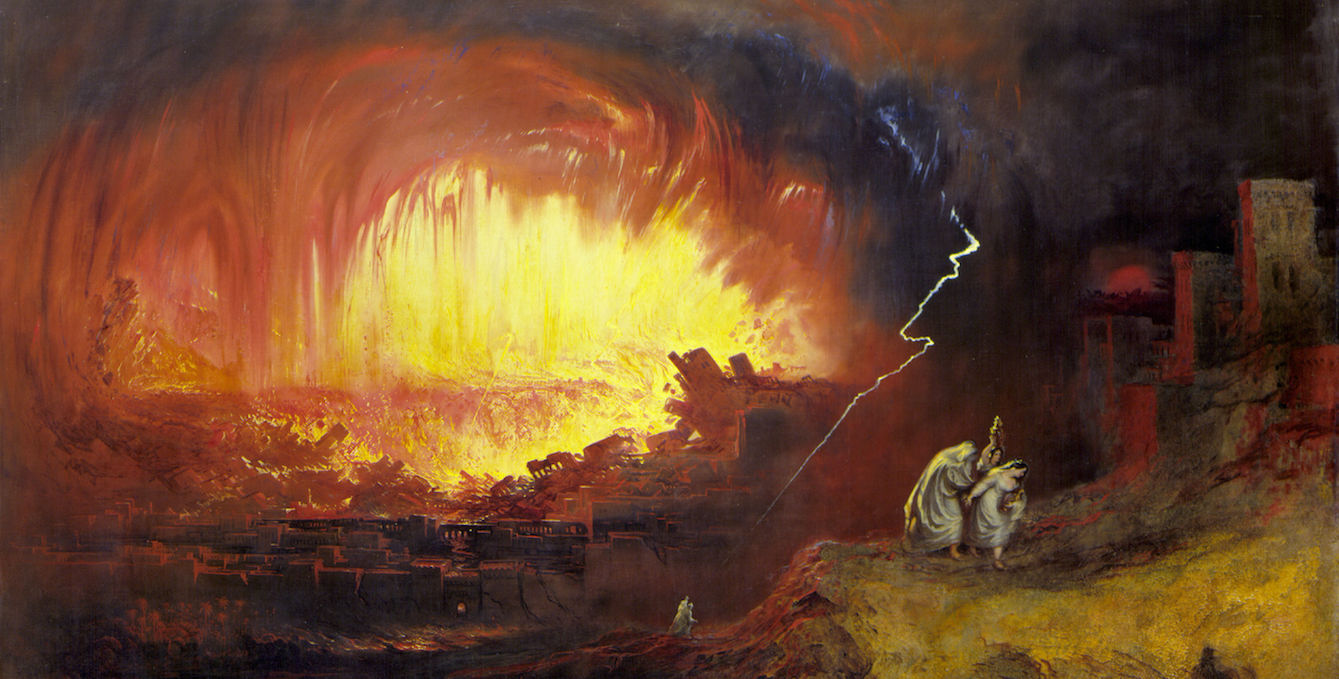
Q18b: Was God unjust for turning Lot's wife into a salt pillar?
She turned and watched the flaming sulfur fall from the sky, consuming everything she valued. Then it consumed her. The Hebrew for “looked back” means more than to glance over one’s shoulder. It means “to regard, to consider, to pay attention to.” The Scriptures don’t say whether her death was a punishment for valuing her old life so much that she hesitated in obeying, or if it was a simple consequence of her reluctance to leave her life quickly. Either she identified too much with the city—and joined it—or she neglected to fully obey God’s warning, and she died.
Got QuestionsQ19: Why would Lot's daughters want to sleep with him?
Remember that the Bible is not a collection of stories, showing heroes in a positive light. It is a collection of books including teachings, but also, largely in the Old Testament a book of history. In a historical book, at least one that is honest and accurate, the failures, frailties, and sins of the people chronicled are not covered up.
There is no denomination or teaching that approves of their actions. It was a sinful act by the daughters of Lot, who live in a sinful and broken world. They probably wanted their line to survive but broke the moral law in doing so.
Genesis 20
Q20: If Sarah was so old, why was Abraham afraid people would want his wife and hence called her his sister?
Sarah lived to be 127 years old. At then time Abraham had her tell this half truth, she was approximately 65 to 67 years old according to various sources. Thus she wasn't yet past half her life. When we compare her age at death to that of Abraham (175), who took another wife after her, she died rather early. Thus she must have still been in her prime.
Genesis 22
Q21: Why did God ask Abraham to sacrifice his only son Isaac?
Take a look at the following passage:
Abraham lived in a time when child sacrifice was common practice. God commanding Abraham to sacrifice Isaac and the stopping it at the last moment was a very effective and clear message that God will not allow child sacrifice to the people of the time.
Further, the point was for Abraham to demonstrate that he trusted God completely and placed him above all else, even his own son. Though God of course already knew that Abraham had faith in him, it was necessary for Abraham to prove it through action. "His faith was made complete by what he did" (James 2:21-23). Because of his actions, not only God but Abraham, his family and future generations knew that Abraham trusted God. This trust was important because it indicated that Abraham had the proper relationship with God (he was treating God as God deserves to be treated) and could benefit from God's good plans for his life.
Rational Christianity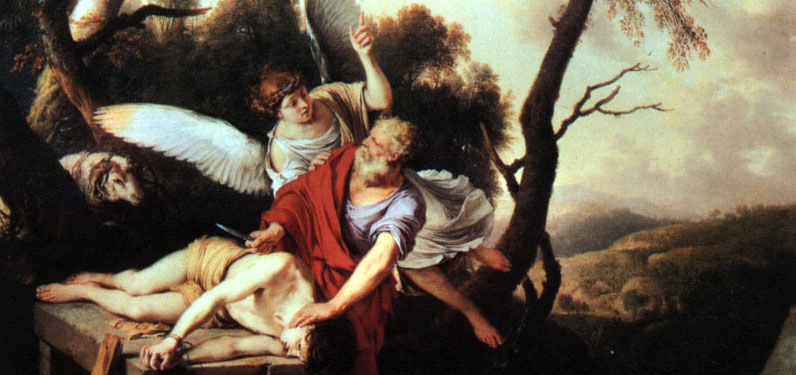
Genesis 30
Q22: Offspring of flocks mating in front of branches have spots?
From a scientific perspective, the action of simply showing the animals branches of trees could have no effect on the color of the offspring. Kidner points out that some of Jacob’s success came from selective breeding, but says that this by itself would have worked very slowly. Kidner suggests that God intervened, referring to Genesis 32: 9-12. - Kidner, D. Genesis Old Testament Commentaries, Inter-Varsity Press (1976)
Prof. John Pearson, however, argues that contained in the sheep left by Laban in Jacob’s keeping were sufficient recessive black genes to produce enough black rams to undertake a selective breeding program. So we know that Jacob could have produced his spotted flock without the branches by selective breeding, but why mention the branches?
From a physical point of view, all of Jacob’s schemes were of no avail because they operated on one assumption, and that assumption was scientifically erroneous. Each of the three techniques Jacob employed was predicated on the belief that visual impressions at the time of conception affected the outcome at birth. The point then of mentioning all these schemes Jacob tried, was to show us that Jacob's success was not due to his efforts, but all glory is due to God.
Genesis 32
Q23: Who is this man Jacob wrestles with, where did the man come from and what was the point?
In this passage, Jacob wrestles with God in a form of a theophany. To understand the reason for the wrestle, we must understand the events surrounding it and the situation Jacob found himself in. Got Questions gives a very good explanation.
Got QuestionsGenesis 34
Q24: Why and how did Simeon and Levi kill every male in the city they lived?
Shechem, the son of the governor of the town, had had sex with Dinah, the sister of Simeon and Levi. We don't know the circumstances, whether it was a case of rape or casual sex. We do know that it wasn't until after he had violated Diana that Shechem decided that he loved Dinah.
Hamor, Shechem's father, presents a case of how a marriage between the two families would be beneficial to both families and the city. But Shechem sticks his foot in and tries to speed up the negotiations.
To Dinah's brothers, this came across as a man offering to pay for the services of a prostitute (Genesis 34:31). He acted as if Dinah was for sale and he told them to name their price. So the brothers told Hamor and Shechem that they would only consent to the marriage if every man in the city was circumcised first. You need to realize that though it is called a city, it would not be very large by today's standards. Likely there are only several hundred people in town, including the women and children. Shechem must have been very much infatuated with Dinah because he agreed.
Though cutting off the foreskin is a common practice today, it is typically done on newborn babies. For adults, the operation is fairly painful - and this was back in the days when they didn't have pain killers and other niceties of modern medicine. Such wounds are likely to become infected and usually, the third day is the worse between the inflammation of the wound and any illness that might accompany it. The most common painkiller in those days was alcohol, but it is also debilitating. Thus the killing of the entire city would not have been very difficult.
Remember that what Simeon and Levi did isn't right, but the Bible isn't out to portray its heroes as perfect beings, but rather as people like us with their own flaws.
La Vista Church of ChristGenesis 35
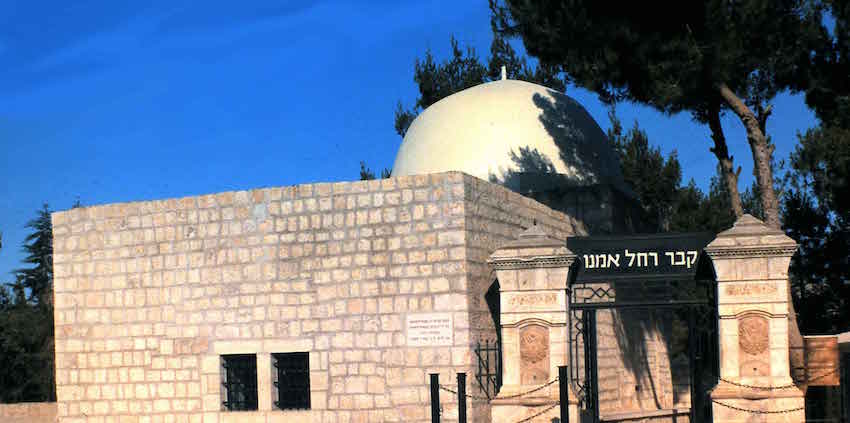
Q25: Is Rachel's tomb pillar still there?
Yes. It is located at the northern entrance of Bethlehem. The tomb where all the patriarch were buried is also still there. We provide a photo of Rachel's tomb.
Genesis 40
Q26: What is the purpose of the Baker and the cup-bearer's dreams?
It was so that Jacob could explain the dreams to both, and then both would come true. When the cup-bearer's services to the Pharaoh is then later restored, he would remember Jacob and tell the Pharoah that a man called Jacob did not only explain his one dream, but the dream of the baker as well, and both turned out to be true. The Pharoah then called Jacob, and the rest is history. Had Jacob not explained those dreams to the cup-bearer and baker, how would the Pharoah ever have called Jacob to the palace?
Genesis 41
Q27: WHICH PHAROAH WAS IN CHARGE DURING JOSEPH'S TIME?
According to Bible Archaeology, no portion of the Old Testament has a richer Egyptian coloring than the story of Joseph. Egyptian names, titles, places, and customs all appear in Genesis 37–50. In the last one hundred years or so, historical and archaeological research has made the study of the Egyptian elements in the Joseph story more fruitful than ever before. They place Joseph in the Middle Kingdom Period, under two great rulers, Sesostris II (1897–1878 BC) and Sesostris III (1878–1843 BC).
Bible ArchaeologyGenesis 42
Q28: Why did Joseph imprison his brothers?
Perhaps out of grief and anger. His motive was to discern the present character of the people he was dealing with. He had suffered greatly at their hands over twenty years prior and had every reason to distrust their words, actions, and commitment to the family.
Bible ArchaeologyWhen Judah steps up and refers only to “my” father, thus assuming his responsible leadership role and, when he says that he simply cannot go back and cause his father such inconsolable grief yet again, Joseph realizes that the moment of truth has come — he cries, he identifies himself, and he insists that Jacob be brought to Egypt where he protect him. - Professor Rabbi David R. Blumenthal
Genesis 47
Q29: Is the law that a fifth of the produce belong to the state still in force today in Egypt?
Joseph established as law the principle that a fifth of the produce grown in the land of Egypt belongs to Pharaoh. This principle was reestablished in July 2005 when a new code slashed the top personal rate from 32 to 20 percent (with two lower rates of 10 and 15 percent) and set the corporate rate at 20 percent. - Alvin Rabushka
Genesis 49
Q30: Why did Jacob say Reuben defiled his bed?
Concubine: (in polygamous societies) a woman who lives with a man but has lower status than his wife or wives.